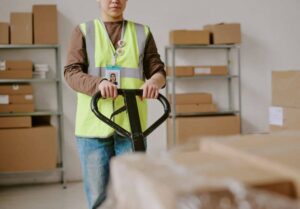
Quick Overview
Manual handling, lifting, carrying, pushing, or pulling objects is a common activity across workplaces, but it can cause injuries if not done correctly. The UK’s TILE method (Task, Individual, Load, Environment) helps assess risks and promote safe working practices.
This blog will walk you through:
✅ What manual handling involves and workplace examples
✅ How TILE assesses tasks for safer handling
✅ Practical examples of TILE in action
✅ Safe manual handling techniques
✅ Tips to prevent injuries and improve efficiency
✅ Why TILE fosters a positive workplace safety culture
When considering safety in the workplace, manual handling may seem like a simple task. However, activities such as lifting, carrying, or pushing and pulling objects can result in slow cumulative injuries if proper care is not taken. Almost every industry, from construction or warehousing to healthcare, retail, and even office jobs, incorporates manual handling in one form or another, and it is something that must be done with care.
In the UK and many other places, TILE is used as a memorable method for assessing manual handling to promote safe working practices. TILE stands for Task, Individual, Load, and Environment and helps reduce risks and safe working hygiene.
In this article, we will discuss the real-life application of TILE and how it can be used for injury prevention and improving effectiveness. Be it a workplace newbie or someone refreshing their safety checklist, this guide will aid in caring and confident performance.
What is Manual Handling?
The term manual handling refers to the moving or supporting of a load through hand or physical force. Activities such as lifting, lowering, carrying, pushing, and pulling all fall under this. The “load” can be diverse, such as boxes, equipment, people in healthcare scenarios, or even hefty files.
As stated in the Manual Handling Operations Regulations of 1992, MHOR, companies in the UK are legally obligated to attempt to avoid dangerous manual handling practices. If it cannot be avoided, risks must be assessed and minimised.
This is where TILE comes in.
What Does TILE Stand For?
TILE is an acronym that stands for:
- Task
- Individual
- Load
- Environment
All four elements must be taken into consideration when evaluating any manual handling work for safety. Let’s examine each of them closely.
Complete Our ‘Occupational Health and Safety’ Course!
T – Task
This points towards the particular task that is being done. It is essential to understand the specifics of what is involved, as some tasks tend to be more dangerous when compared to others.
Main Considerations
- Is the task done repeatedly?
- Does it require twisting, bending, or reaching?
- Does the person have to carry the load over a long distance?
- Is there a need to change direction many times?
- Involving some rigid movements, is there any awkward motion?
A Practical Example:
Think of a scenario where you need to transport boxes from a storage room to the van. If you need to twist your body or lift the box above shoulder level, this increases your risk of strain or injury. Safeguards could be implemented by changing the layout of the workplace and using a trolley.
I – Individual
The focus here becomes the different capabilities between individuals. Every person faces unique challenges. Level of fitness, existing health conditions, height, and even previous experiences all play a crucial role.
Key Considerations:
- Does the worker have specific training for the job?
- Is there any pre-existing injury or medical condition?
- Is the individual fit enough for the job?
- Is there a lessening of physical exertion?
- Is the worker wearing the right apparel?
A Practical Example:
A somewhat seasoned warehouse employee may be able to lift a heavier load as compared to a new employee on their first day at work. Pregnant employees, or those with back pain or general malaise, have higher risks, so adjustments must be made.
L – Load
This is related to what is being carried or lifted. The characteristics of the load, in particular the risk associated with the manual handling task, can be influenced very much by the load.
Key Questions:
- How heavy is Textron?
- Is the weight concentrated?
- Can a good grasp be attained on the object?
- Is the object an unsteady bulge?
- Can it be classed as hot, or does it contain sharp edges, or termed hazardous?
Practical Example:
The box of files has a defined weight; however, the size blocks the user’s line of sight, thus making it bulky and difficult to carry. On the other hand, some bags that are not well sealed tend to spill their contents and, as such, throw off one’s balance.
E – Environment
In this section, these encompass the geographical area where the task is performed. The physical environment also seeks to take into consideration the environment in which a particular manual task is carried out.
Key Questions:
- Is there enough elbow and free light space to eliminate clutter?
- Is there any obstruction caused by uneven floors or Slip hazards?
- Is the amount of light too much or too little?
- When looking at lighting, what do you consider hot or too cold?
- Does the space provided allow a high degree of freedom in movement?
Practical Example:
An example would be working in narrow, poorly lit corridors, and even poorly lit corridors cluttered with materials. Working in poorly lit and cluttered enclosed spaces poses a greater risk than working in well-lit open spaces devoid of clutter and clear paths.
Putting TILE into Practice
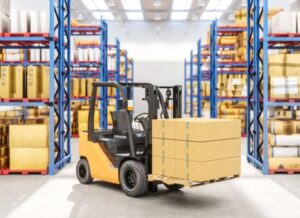
Now, let’s look at a complete example:
You’re employed at a retail store, and your job is to take stock items off an incoming delivery and place them in the storeroom.
Before you start working, give yourself a minute to think about the application of TILE principles:
- Task: For this case, a worker would be required to lift the sack out of the storage area. A sack truck will be used for the more cumbersome lifts and to avoid bending.
- Individual: You have received manual handling training before, but this is your second shift of the day. After this shift, you decide to take a longer break and ask a co-worker to take care of the more challenging lifting tasks.
- Load: It is important to note that the boxes of stock are medium in size and are filled with bottles. To an extent, these appear to be weighty. Enthusiastically, you try lifting them and using controlled lifting.
- Environment: The light was not really ideal, and there were several obstacles in the stockroom. So, you make a clean, designated area and turn on the unwanted lighting before beginning.
Why TILE Matters
Using this way of working may not appear to visibly impact risk and safety in work, but actually, taking these proper steps will create a safer workflow system.
Using TILE may seem practical thinking, but in such a rush or when dealing with pressure, these steps are overlooked, resulting in reaching for dangerous, miscalculated movements.
According to the HSE in the UK, manual handling injuries are one of the leading causes of workplace accidents, and they often result in chronic conditions such as back pain and joint-related issues.
By incorporating TILE into your routine, you:
- Reduce chances of injury.
- Make processes simpler and more streamlined.
- Comply with legal safety requirements.
- Foster a positive safety culture in the workplace.
Safe Manual Handling Tips
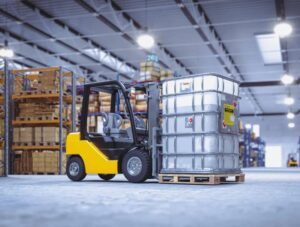
Safe handling techniques should be done in combination with risk assessment to improve efficiency, and TILE helps with this.
- Keep loads close to the body.
- Bend at the knees instead of the waist.
- Don’t twist—turn your body instead.
- Use trolleys or pallet jacks whenever possible.
- If lifting with a team, coordinate efforts.
- Know and communicate your limits.
Last but not least, don’t be in a rush. In order to avoid months of pain or missed work, a few seconds spent assessing the situation can make a major difference.
Complete Our ‘Occupational Health and Safety’ Course!
Final thoughts: Safety starts with Safety Awareness
It may appear simple, but manual handling is certainly not routine. It involves numerous tasks, including lifting machinery, assisting a patient, or even shelf stacking, all of which provide their unique set of challenges. The TILE method is a four-step strategy to defence that focuses on safe handling and aids in protecting the individual and surroundings before touching the load.
Assessing the Task, Individual, Load, and Environment safeguards you and, most importantly, those around you. If you are accountable for a training session or supervising others, advocating TILE is deemed good practice and pivotal leadership.