
Quick Overview
Manual handling injuries are one of the most common workplace accidents in the UK, often causing back strain, fatigue, and long-term health issues. The TILE method—Task, Individual, Load, Environment is a practical framework to assess risks and make lifting, carrying, and moving loads safer.
This guide will walk you through:
✅ What TILE stands for and why it matters in manual handling.
✅ How to assess tasks, people, loads, and environments before lifting.
✅ Practical examples of TILE in action across industries.
✅ The difference between TILE and LITE in safety training.
✅ Legal duties under UK MHOR regulations and employer responsibilities.
Sustained injuries through manual handling still stand as one of the most prevalent sources of accidental injury in the workplace in the UK. As the Health and Safety Executive (HSE) reports, lifting, carrying, and load moving contribute to a high percentage of musculoskeletal disorders for both industrial and office jobs. Thankfully, these risks are manageable if the right techniques are employed, the TILE method being one of the central techniques.
For employees, supervisors, and business owners alike, applying the TILE principles of manual handling creates a safer and more productive workplace. In this guide, we’ll provide you with information on how to implement TILE to reduce the manual handling risks in your routine activities.
What is TILE manual handling?
In risk assessments for manual handling, TILE is an acronym that stands for four key elements:
- T – Task
- I – Individual
- L – Load
- E – Environment
This structure helps teams and individuals assess the risks associated with a manual handling task and ensure all components are suitable for the participant.
Following proper health techniques with TILE helps reduce the chances of:
- Spinal Injuries or Back Strain
- Repetitive Muscle Strain and Fatigue
- Slips, Trips, and Falls
- Long-term health issues due to poor practices
Complete Our ‘Occupational Health and Safety’ Course!
T – Task: The Objective to Reduce Strain Through Change of Movement
In this case, analysing the task procedures must be done. What movements are required?
Ask the Following:
- Does the task include lifting, lowering, pushing, pulling, or carrying?
- Is the movement awkward or repetitive in nature?
- Are you twisting, bending or overreaching?
How It Reduces Risk:
- By high-strain actions for alternatives, the outcomes for risk are much better. For instance,
- Rearranging workflows to reduce the amount of repetitive motions
- Utilising equipment that allows for minimal physical effort, like trolleys and hoists
- Taking breaks in the middle of repetitive tasks to minimise the chance of fatigue
Example:
If a worker has to throw heavy boxes from floor level to an imaginary zero-gravity height repeatedly, staging them on a raised platform cuts the need to bend down each time and then toss the box upwards.
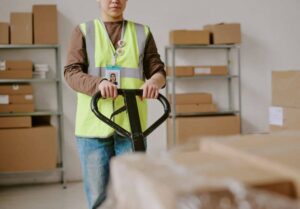
I – Individual: Workers Are Matched to Tasks
There is no ‘one size fits all’ when it comes to people and their unique shapes. A person’s medical history greatly impacts how they undertake manual work.
Let’s take into account:
- Age, psychological conditioning, history of fitness, height and strength.
- Existing conditions and injuries.
- Stress, fatigue, and inexperience.
- Proper training on manual handling techniques.
How it Reduces Risks:
Prevention of illness and injury risk to employees relies heavily on the physical attributes and psychological condition of the employee.
Individual workloads should be set at manageable limits to ensure a smooth execution. Employees with fitness issues or recovering from an injury require special consideration.
More illustrative is considering how a brand-new warehouse employee should never be assigned to the heaviest or most complex loads until they have been properly trained and supervised.
L – Load: Understand the Risks Hidden in the Object
Understanding the load means understanding its size, weight, shape, and contents.
Check:
- Weight: Is it liftable?
- Size and shape: Is it cumbersome?
- Stability: Would the contents shift or spill?
- Grip: Are there handles, or is the surface slippery?
How it Reduces Risks:
Effective load understanding can ensure an employee does not have too much weight lifted off them, while also prompting sensible use of protective equipment like gloves, grips, or lifting aids.
Example:
While carrying a light box, one might encounter heavy counters and difficult-to-navigate spaces. It may be better to preemptively disassemble portions to ease transport or utilise carts.
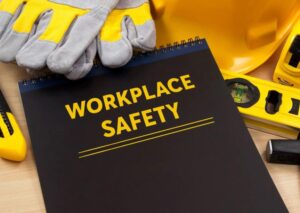
E – Environment: Enhancing Workplace Safety
Finally, it is critical to evaluate the safety factors associated with the work environment.
Evaluate:
- Floor condition: Maintenance: Is it free of debris and dry?
- Illumination: Does the area have sufficient light?
- Space: Is there adequate space to move?
- Temperature: Might it lead to fatigue or sweating?
- Slopes, stairs, or uneven terrain.
Risk Reduction Explanation:
Even safe loads can become unsafe due to environmental risks. Conditions such as wet floors or cables pose significant dangers when lifting, leading to injury.
Example:
Consider a worker transporting a load through a narrow hallway. Poor lighting combined with clutter increases their likelihood of stumbling or straining compared to a well-lit, clear path.
How TILE Reduces Real-World Risks
Now, let’s implement TILE in a real-life example in a warehouse:
Scenario:
A worker needs to relocate a 20 kg box of supplies to a workstation 10 meters away.
- Task: The box is required to be lifted from ground level and placed onto a workstation at chest level.
- Individual: Moderate physical exertion has left this otherwise well-trained and fit staff member mildly fatigued.
- Load: The box is indeed a challenging load, devoid of handles.
- Environment: Visibility is limited in this space that is narrow space, but the floor is dry.
Adjustments Using TILE:
- Task: To decrease carrying distance, use a trolley for transport.
- Individual: To avoid fatigue strain, allow a brief rest break prior to lifting.
- Load: Compensate for the lack of handles with grip gloves.
- Environment: The area should be organised in advance, and well-lighted areas should be available near the bench.
By addressing all four TILE factors proactively, injury risks can be mitigated extensively.

UK Legal and Workplace Considerations
In accordance with the Manual Handling Operations Regulations 1992, employers must:
- Avoid manual handling wherever possible.
- Evaluate any manual handling deemed necessary.
- Implement appropriate safe practices to mitigate injury risk.
In this case, legal requirements are fulfilled as using TILE allows proper risk assessment in manual handling, and employers don’t infringe employees’ responsibilities over personal safety.
These employers are at risk of losing and compensating claims as well as enforcement from HSE purely because the risks of manual handling were not assessed and subsequently managed.
Advantages of Handling TILE the Right Way
Notably, if accident prevention is only a ‘one-and-done’ checklist, TILE can be adopted as a daily practice. As such, illness prevention and overall wellness are managed at a much higher level, with too many further-reaching advantages:
- Reduced Absenteeism – Sick Days and Injuries
- Increased and Boosted Staff Morale
- Higher and Undistracted Productivity
- Decreased Compensation and Insurance Premiums
- An Improved Health & Safety Culture
Encouraging quick TILE assessments before tasks brings about a habitual nature of safety, just as checking mirrors before driving.
TILE vs LITE: Any Notable Differences?
LITE is another TILE (Load, Individual, Task, Environment) that is used in some workplaces. These acronyms can cover the same four elements and thus are interchangeable. As always, what matters is common understanding across the organisation.
In training and safety documents, TILE is more prevalent across the UK than LITE.
Complete Our ‘Occupational Health and Safety’ Course!
Final Thoughts: Make TILE a Habit, Not a Hassle
TILE manual handling is not just checking off a box for compliance. It is a robust and sensible framework that, if adhered to consistently, will greatly minimise the injury risk.
Regardless of which manual handling task you face, assess yourself with these prompts:
- What is the Task?
- Who is the Individual?
- What is the Load?
- What is the Environment?
Answering these questions helps quickly evaluate the situation at hand and may help save yourself or your team from long-term back pain or more complex issues.