Quick Overview
Personal attributes are the traits that define how you work, interact, and contribute within a team or organisation. They go beyond qualifications and experience, helping employers see your potential and fit for a role. Understanding and showcasing your personal attributes can strengthen your job application and interviews.
This guide covers:
✅ What personal attributes are and why they matter in job applications
✅ How to recognise your own attributes through reflection, feedback, performance reviews, and online tools
✅ Using job descriptions to identify attributes employers value
✅ Applying the STAR technique to uncover and demonstrate key traits
✅ Highlighting personal attributes in your CV, cover letter, and interviews
✅ Examples of highly valued attributes such as reliability, resilience, empathy, initiative, teamwork, and communication skills
Your qualifications, skills, and experience matter a lot when applying for a job, but they aren’t the only things needed, you need personal attributes too. There is a whole new aspect that employers want to know, which is personal attributes and these qualifications. These attributes are the traits that determine how an individual works, interacts, and contributes to a team or organisation. Here are some of the most important things to know. Most people find it troublesome to explain attributes in a job application.
This is precisely the guide you will learn what personal attributes are, how they are important, and most importantly, how to know for yourself so that you can present yourself very confidently to potential employers.
🎯 What Are Personal Attributes?
There are your personal traits or qualities, such as attention to detail, empathy, and self-motivation. They define how a person approaches tasks, interacts with people, and how he or she reacts in various situations. Personal attributes cannot be learned and measured, unlike technical skills; personal attitude is more about character and mindset.
Here is an example:
- Being reliable is demonstrated by being punctual and doing what was agreed on.
- Being flexible is dealing with change in a constructive manner.
- Being self-motivated is taking initiative without being asked to lead.
These traits are necessary in any job setting. Employers are placing more emphasis on these traits, especially in entry-level and team roles.
🧠 Why Personal Attributes Matter in Job Applications
Think about these two applicants who have the same qualifications. One is characterised as hard-working, dependable, and proactive, while the other merely states what roles they’ve held in the past. Which one do you think leaves a greater impact?
These traits impact your application in the following ways.
- 1. Helps the employer predict your behaviour on the job.
- 2. Helps distinguish your application from others who are equally qualified.
- 3. Helps the employer, who is deciding between two strong applicants, to choose one.
- 4. Helps to prove that you will fit the company’s culture and will have healthy working relationships with colleagues.
To summarise, keeping your personal attributes in mind can greatly impact your chances of being selected for an interview and, ultimately, the job.
🔍 Ways to Recognise Your Personal Attributes
Not sure where to start? That’s okay. Here are some strategies to discover how you can stand out to potential employers.
1. Think Back to Your Experiences
Try to remember some moments where you have had to
- Face challenges.
- Work with others.
- Held a position of authority.
- Handle stress.
- Assist a peer.
Now ask yourself:
- What did I do to resolve the challenges?
- What did others appreciate about me?
- What are the things I’ve got to learn about myself?
Insights from the above can help uncover the attributes of the ability to bounce back from a setback, leadership, compassion, and plan and manage.
2. Offer and Receive Feedback
Often, the things that we are best at are things which we completely overlook. Ask the following questions to friends, family, tutors and previous colleagues that you can trust:
- What is the first thing that comes to your mind when I say, Describe me in three words?
- What do you think is my forte?
- When do you think I am the best?
You may find that the responses are surprisingly aligned and in sync with what employers expect.
3. Revisit Feedback and Performance Reviews
Check your performance reviews, feedback from your tutor or any work experience which includes. Part-time or full-time roles. Think back to what was mentioned in relation to your work ethic and manner of work.
Look for statements like:
- “Always willing to help others”
- “Takes initiative”
- “Stays calm under pressure”
- “Highly dependable”
These statements likely capture your strongest personal attributes.
4. Utilise Online Tools and Self-Assessments
Consider tools like:
- CliftonStrengths
- 16 Personalities (MBTI)
- DISC personality profile
- High5 Strengths Test
While these tools don’t claim to offer absolute answers, they can provide useful vocabulary to explain your qualities and increase self-awareness.
5. Examine Job Descriptions for Insights
Focus on the job advertisements you are keen on. Most employers indicate the personal attributes they seek in the section: What we are looking for, or You will be.
Illustrations:
- “A self-starter with great attention to detail”
- “A team player who thrives in fast-paced environments”
- “Excellent interpersonal and communication skills”
If you identify with these statements, you should consider incorporating them in your application.
6. Use the STAR Technique to Identify Personal Attributes
The STAR (Situation, Task, Action, Result) technique is useful beyond interviews. It can also help you discover your personal attributes through your experiences.
Here is an example:
- Situation: You had a group presentation to lead in university.
- Task: Make sure every group member had an equal say, and the group stayed within the time limits.
- Action: You set up a system for meetings, balanced task assignment, and conflict resolution.
- Result: Your group received top marks.
In this example, you demonstrated leadership, communication, time management, and conflict resolution.
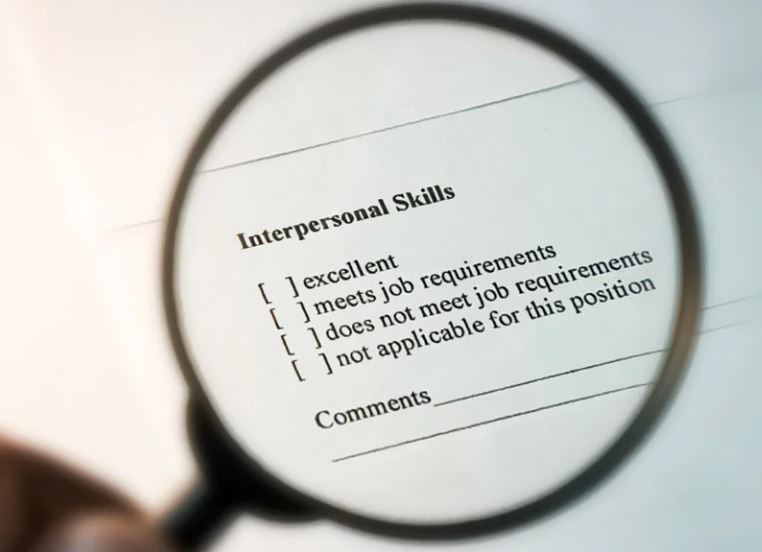
📝 Highlighting Your Skills Throughout A Job Application
After identifying your personal attributes, it’s important to demonstrate them. This can be achieved by showcasing them in your CV, interview, and cover letter.
On Your CV
Personal CV attributes can be included in:
- A personal statement at the top
- Descriptions of your work experience
- A skills or key strengths section
Personal statements example:
“A person with unquestionable motivation, dependability, and a graduate in psychology. A person with effective communication competencies, who pays attention to details, and who can work in a team under significant pressure”
Example of experience bullet:
Enhanced productivity in a data centre by maintaining close to 100 per cent accuracy in data entry in the course of 3 months. Developed a process to streamline data entry checks that lowered the error rate by 30 per cent during the 3-month period”
Applying Through A Cover Letter
Tell a brief story that illustrates your attributes.
Example:
“During my internship at a mental health charity, I demonstrated empathy and active listening by supporting vulnerable clients in distress. My ability to remain calm and build trust contributed to positive feedback from both service users and supervisors.”
During Interviews
Be ready to describe your attributes with examples using the STAR technique.
Example Question: “Tell me about a time you worked under pressure.”
Answer:
“In my final year of university, I was managing multiple deadlines. I created a structured timetable, prioritised tasks, and stayed disciplined. My strong time management and resilience helped me submit all assignments on time—with one even receiving a distinction.”

🌟 Common Personal Attributes Employers Value
Here’s a non-exhaustive list of attributes to consider as you reflect on your own:
- Reliability
- Motivation
- Initiative
- Leadership
- Teamwork
- Creativity
- Problem-solving
- Communication
- Flexibility
- Organisation
- Integrity
- Empathy
- Resilience
- Confidence
- Patience
Don’t try to claim all of these. Pick the ones that genuinely reflect you, and build your application around them.
✅ Final Thoughts
Your personal attributes tell employers what kind of person you are—not just what you know. They give you a human edge in a competitive job market and help demonstrate how you’ll fit in, collaborate, and contribute from day one.
If you’re unsure where to begin, start with one experience you’re proud of. Unpack what you did and how you did it. You’ll find your personal attributes hiding right there in the details.
Ready to take the next step in your job search?
At Jobsland.co.uk, we offer tools, CV templates, and training designed to help you stand out—based not only on your skills but on who you are.