
Quick Overview
Lifting, stacking, and moving items may seem routine, but they are one of the biggest causes of workplace injuries in the UK. The TILE principles—Task, Individual, Load, Environment help reduce risks by ensuring every manual handling activity is safe, practical, and legally compliant.
This guide will walk you through:
✅ What TILE stands for and how it supports safe manual handling.
✅ How to assess the task, the person, the load, and the environment.
✅ Practical TILE examples in healthcare, warehouses, offices, and schools.
✅ Why TILE is effective in reducing injuries and improving workplace culture.
✅ The UK legal context (MHOR 1992) and employer responsibilities.
Moving equipment, stacking items, or lifting boxes appears to be a routine part of the workday. However, it is one of the top causes of workplace injuries. When employees do not lift items properly, it can lead to back strains and even long-term chronic musculoskeletal disorders, impacting both their health and the productivity of the company.
Luckily, there is a simple and very efficient method to overcome this problem: TILE manual handling principles.
In this TILE principles (Task, Individual, Load, Environment) guide, we discuss how these principles enhance workspace safety, reduce injuries, and create a positive workplace culture across various settings, be it warehouses, offices, hospitals, or schools.
What Are TILE Principles?
TILE is an acronym used in manual handling risk assessments and training. It breaks down manual handling into four key areas:
- T — Task
- I — Individual
- L — Load
- E — Environment
Together, these four components help evaluate laboratory tasks to ensure they are safe to be performed, aided, or simplified. Ideally, assessing each factor prior to starting a task aids in identifying potential hazards, job adaptation opportunities, and accident prevention strategies.
Enrol for Our ‘Occupational Health and Safety’ Course!
T – Task: Reassess the Way Work is Done
- The first element, Task, poses the question, “What needs to be done?”
- Lifting, Pushing, Pulling and Carrying, Do They Involve This?
- Form of a motion – repetitive or not?
- Distanced dangerous postures or distances involving work zones
Is the workload action based, one-time, or ongoing? Continuously engaged and monotonous?
How safety is enhanced – improvements:
- By studying the moving parts, you are able to eliminate some of the pressure by redesigning the task. Such as:
- Load positioning adjustments to avoid bending and twisting.
- Repetitive tasks should be scaled down into simpler, easy-to-complete components.
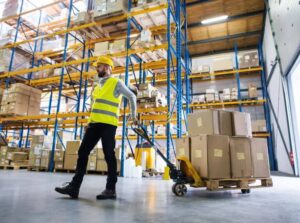
- Implement trolleys, hoists, and pallet jacks, thus reducing the workload needing to be performed physically.
In the real world:
If employees are required to repetitively push carts up a slope, this should be adjusted to help mitigate stress on the body, or tools should be provided.
I – The individual: Adapt The Task To Suit The Worker
The individuality component states that all people are built differently with varying strengths and weaknesses. What are:
- Is the person able to do the task, physically able?
- Tired, sick, or injured?
- Training properly?
- When it comes to manual handling, understanding protocols.
- How is safety improved?
When tasks are assigned based on skills, the risk of injury or over-expenditure drastically decreases. Training ensures they understand posture and technique to minimise harm.
Impacting the real world:
Some new hires may struggle to adjust to the demands, while others may require time. Balanced assignments or offering team lifts help avoid injuries.
L – Load: Understand What You’re Carrying
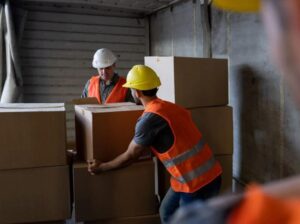
The Load includes everything regarding the object to be lifted:
- Weight
- Size and shape
- Stability and balance
- Grip difficulty
- Contents (liquid, sharp, fragile, etc.)
How it improves safety:
- Understanding the load helps determine:
- If the item can be carried alone without risk.
- Whether supporting devices for lifting are necessary.
- If the load needs repackaging or splitting.
Real-world impact:
An employee trying to lift a large but lightweight box can be at risk if the box is awkwardly shaped or slick. Adjusting the packaging or using gloves could help.
E – Environment: Safety Of The Surroundings
The Environment includes all the conditions where the task is conducted:
- Is the floor tidy and free of any slopes?
- Is there appropriate lighting?
- Is there space to move?
- Are there steps or other obstacles, congested traffic?
How it mitigates safety risks:
Wet floors, poor lighting, cluttered walkways, and other environmental hazards can result in trips, slips, and falls, particularly when carrying loads.
Real-world impact:
A safe lift can become dangerous when the lifting space is cluttered or the floor is slippery. Improving these conditions by cleaning, providing light, and uncluttering reduces risk.

TILE in Action: A Brief Evaluation
Consider a healthcare worker transporting medical equipment from a storeroom to a ward.
- Task: Carrying multiple boxes for a distance of 15 meters.
- Individual: A newly recruited employee lacking in lifting skills.
- Load: Moderate mass, bulky shape, no handles for grip.
- Environment: Constricted passage frequented by staff.
Applying TILE To Assess:
- Task: Suggest splitting up the trips, as one person can only carry a maximum of two boxes at a time.
- Individual: New staff can be paired to work alongside a more experienced staff member.
- Load: Provide a trolley instead of having the boxes carried.
- Environment: Quieter time periods can be selected to reduce staff traffic.
- Immediate outcomes: Less strain alongside better support and a safer process.
Why the TILE Principles Are Effective
TILE can work as a checklist, but more importantly, it’s a way of thinking. Here’s why it can help with safer handling:
Forward Thinking Safety – Helps You Think Ahead
TILE allows staff to pre-lift think instead of lifting, rather than out of muscle memory.
Personalised Safety
Rather than rigid one-size-fits-all safety compliance, risk assessments with TILE are tailored to every unique case.
Helps Invite Input
Management and employees can discuss what’s functional and non-functional for effective work design because they use TILE to create assessments.
Minimise the Risk Of Cumulative Injuries
The more you comply with TILE, the less the risk of repetitive injuries that arise from poor handling over time.
Legal Relevance of TILE in the UK
The Manual Handling Operations Regulations 1992 outline the legal responsibilities of UK employers as follows:
- Avoid hazardous manual handling where possible.
- Assess manual handling risks that cannot be avoided.
- Reduce risk by task design or through aids.
TILE is a practical remedy for fulfilling these obligations. It is incorporated in HSE-approved training and assessments, thus making it both legally compliant and industry-recognised.
Building a Culture of Safety with TILE
When TILE principles are integrated into workplace culture:
- Employees naturally evaluate their surroundings.
- Better communication occurs around defined risks/risks are better defined.
- There are fewer incidents of manual handling injuries.
- Employees feel free to voice safety concerns.
Safety ownership is fostered, and safety transforms from a mere policy into a culture.
Common Mistakes Without TILE
Workplaces that do not utilise the TILE principles tend to face challenges such as:
- Employees lifting weights that they are not capable of carrying.
- Performing tasks under unacceptable conditions (wet floors).
- Strain injuries from repetitive movements that have not been assessed.
- Increased absenteeism and compensation claims.
These are all easily resolvable—TILE identifies the issues and provides the solutions.
Enrol for Our ‘Occupational Health and Safety’ Course!
Conclusion: Think TILE, Lift Smart
The TILE principles of handling manual processes are not mere words; they are simple and efficacious means of minimising injuries while enhancing working environments. As an employer, you can apply TILE when planning training sessions, structuring tasks, and ensuring workplace safety. If you are an employee, consider TILE before any manual lift. It could save you from health complications down the road.